
 Image 1 of 2
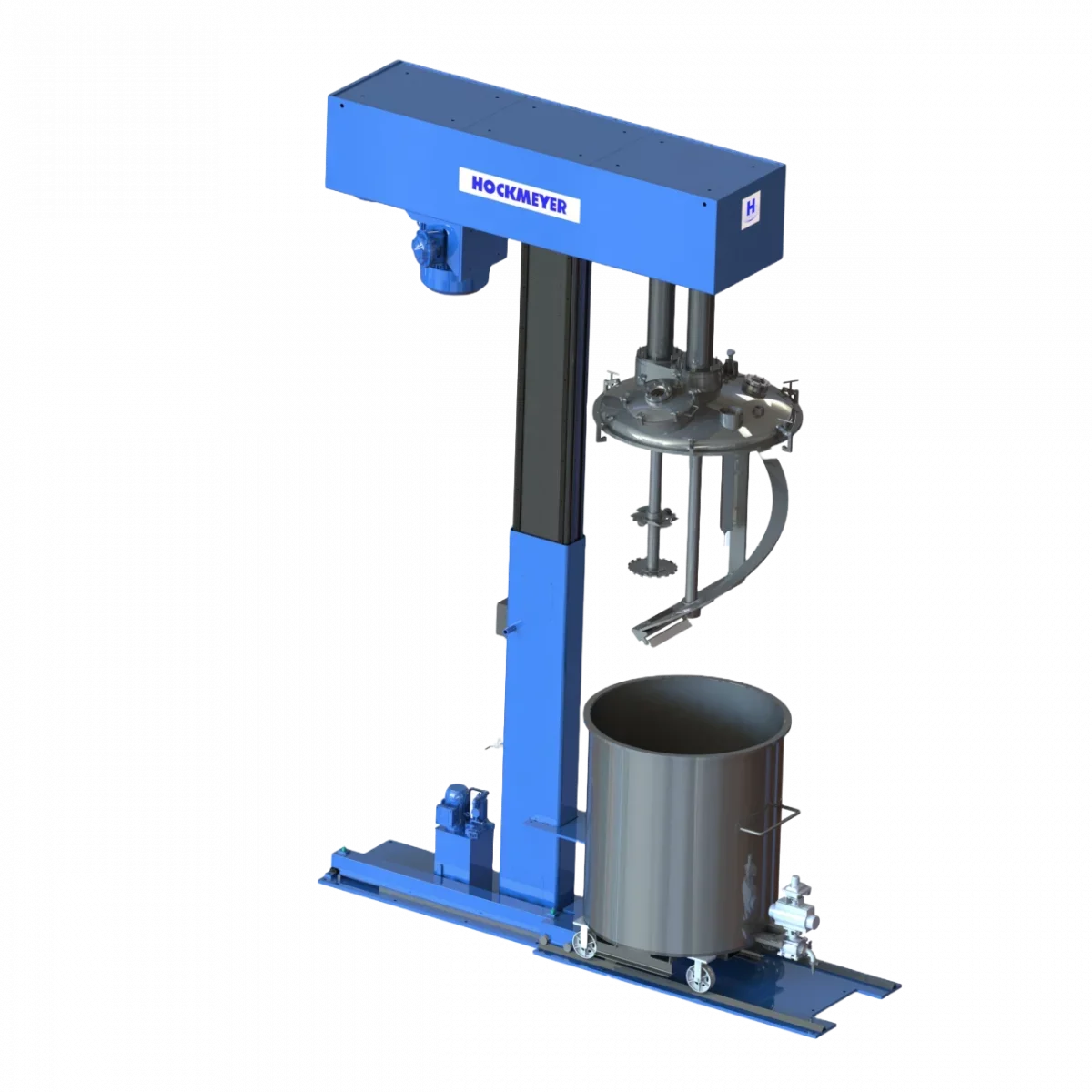 Image 2 of 2
Hockmeyer's dual-shaft mixers have a center-mounted low-speed helical or anchor blade, which sweeps the mixing vessel wall and a high-speed dispersion shaft to ensure proper dispersion. These are most often used to mix medium to very high-viscosity products. The high-speed shaft provides shear to disperse or dissolve ingredients. The low-speed sweep feeds the dispersion blade by blending and folding the mass in the vessel to improve product uniformity. The patented scrapers provide excellent heat transfer and aid in powder incorporation.
Sizes from laboratory units to 3500 gallons
Hoist or tank mounted configuration
Inverter driven motors
Stainless steel or carbon steel material of construction
Helical or anchor sweep low-speed blade, with various high-speed blades available
Vacuum, pressure, or atmospheric operation
Electrical components for hazardous environments
Built-Up Inverter
Dual-shaft mixers blend and fold the mass in the vessel and improve product uniformity by scraping the walls. Multi-shaft mixers are most often used to mix medium to high-viscosity products.
A high-speed disperser alone has a limited zone of influence in viscous products, so the low-speed blade is necessary to achieve a homogeneous mixture. When equipped with scrapers, the low-speed blade also aids in heat transfer.
Used in the making of printing inks, sealants, caulks, hot melt adhesives, magnetic media slurry, creams, lotions, toothpastes, etc.
The dual-shaft configuration will handle most Multi-shaft mixing jobs. Because it has separate mixing shafts, maintenance is easier on a Dual Shaft than on a Concentric Shaft mixer.
Our multi-shaft mixers are designed by an experienced engineering staff incorporating information from customers, our own R&D Laboratory, and data from decades of HOCKMEYER Multi-shaft mixers in service.
Our standard low-speed blades, for example, use a triangular cross-section, which is both strong and presents a wide profile for efficient mixing action. This design is stronger than a blade made from flat bar and easier to clean than a blade with circular structural elements. Our low-speed blades move product efficiently at relatively low peripheral speeds and typically require less horsepower than our competition’s mixers. Lower tip speeds mean longer life for scrapers.
HOCKMEYER machines have a reputation for performance and reliability. That is by design.
Hockmeyer's dual-shaft mixers have a center-mounted low-speed helical or anchor blade, which sweeps the mixing vessel wall and a high-speed dispersion shaft to ensure proper dispersion. These are most often used to mix medium to very high-viscosity products. The high-speed shaft provides shear to disperse or dissolve ingredients. The low-speed sweep feeds the dispersion blade by blending and folding the mass in the vessel to improve product uniformity. The patented scrapers provide excellent heat transfer and aid in powder incorporation.
Sizes from laboratory units to 3500 gallons
Hoist or tank mounted configuration
Inverter driven motors
Stainless steel or carbon steel material of construction
Helical or anchor sweep low-speed blade, with various high-speed blades available
Vacuum, pressure, or atmospheric operation
Electrical components for hazardous environments
Built-Up Inverter
Dual-shaft mixers blend and fold the mass in the vessel and improve product uniformity by scraping the walls. Multi-shaft mixers are most often used to mix medium to high-viscosity products.
A high-speed disperser alone has a limited zone of influence in viscous products, so the low-speed blade is necessary to achieve a homogeneous mixture. When equipped with scrapers, the low-speed blade also aids in heat transfer.
Used in the making of printing inks, sealants, caulks, hot melt adhesives, magnetic media slurry, creams, lotions, toothpastes, etc.
The dual-shaft configuration will handle most Multi-shaft mixing jobs. Because it has separate mixing shafts, maintenance is easier on a Dual Shaft than on a Concentric Shaft mixer.
Our multi-shaft mixers are designed by an experienced engineering staff incorporating information from customers, our own R&D Laboratory, and data from decades of HOCKMEYER Multi-shaft mixers in service.
Our standard low-speed blades, for example, use a triangular cross-section, which is both strong and presents a wide profile for efficient mixing action. This design is stronger than a blade made from flat bar and easier to clean than a blade with circular structural elements. Our low-speed blades move product efficiently at relatively low peripheral speeds and typically require less horsepower than our competition’s mixers. Lower tip speeds mean longer life for scrapers.
HOCKMEYER machines have a reputation for performance and reliability. That is by design.